Translating Ernst Jandl's poetry into a multisensory exhibition
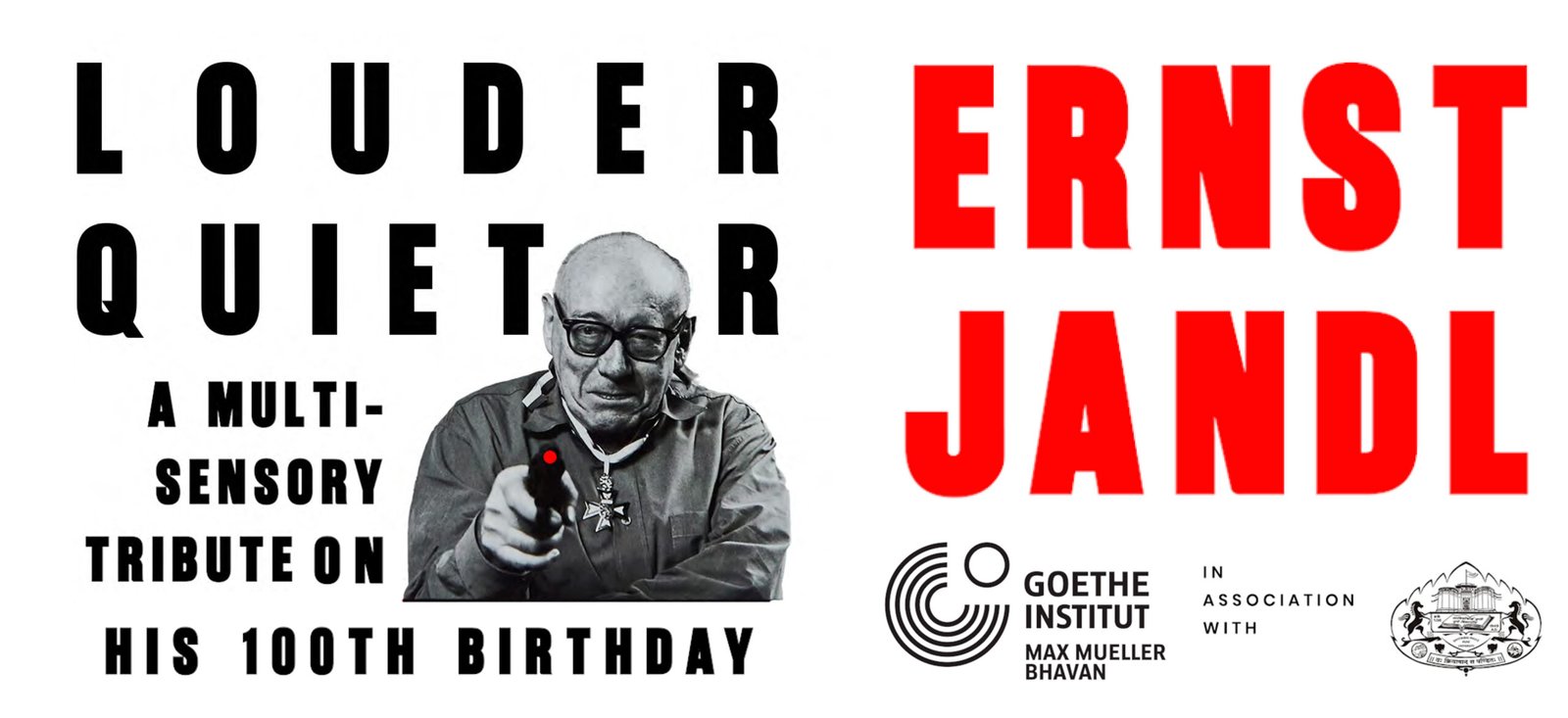
Louder Quieter is a multisensory exhibition conceived to mark the centenary of Austrian poet Ernst Jandl. Presented by Goethe-Institut / Max Mueller Bhavan Pune, the exhibition translated experimental poetry into twenty-two installations combining typography, sculpture, sound, film, and participation. The exhibition was presented in Pune, India, in German, English, and Marathi.
The Challenge: How do you exhibit poetry?
Ernst Jandl's work resists conventional reading. Rather than illustrating his poems, the exhibition translated them into environments that visitors could inhabit through movement, participation, sound, and touch.

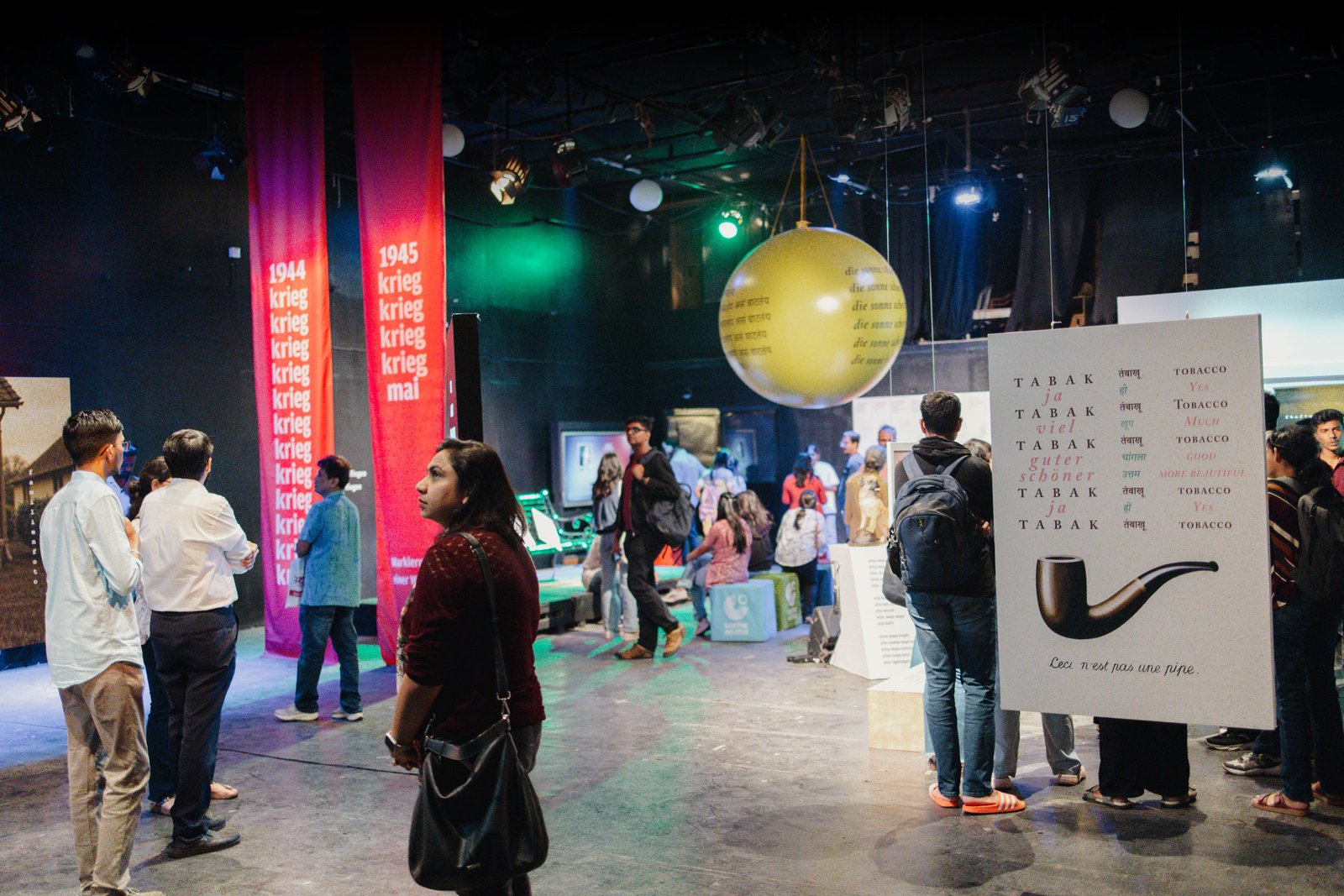
Experienced by over 1,800 visitors across five days, the exhibition comprised 22 installations organised into five thematic sections, presented in three languages, conceived and produced within 45 days, and installed on site in just 24 hours.
Curatorial Framework : Louder, Quieter
Ernst Jandl’s poetry resists passive reading. His poems demand to be spoken, heard, misheard, performed, and physically experienced. Language in Jandl’s work is not merely a carrier of meaning; it is itself material. Words become sounds, sounds become actions, and actions become experiences. Louder Quieter was conceived as an attempt to translate this experiential quality into an exhibition format. Rather than presenting poems as texts on a wall, my response was a different question: What happens when poetry becomes a space to be entered, an object to be encountered, a sound to be heard, a moment to be lived and a movement to be performed?The exhibition thus transforms selected works by Jandl into twenty-two installations distributed across five thematic constellations: Nature, Being Human, Civilization, War, and Death. These themes are not rigid categories but recurring territories within Jandl’s oeuvre through which visitors encounter the poet’s concerns with language, perception, authority, conflict, memory, and mortality.The exhibition proposes that poetry can be inhabited rather than merely read.
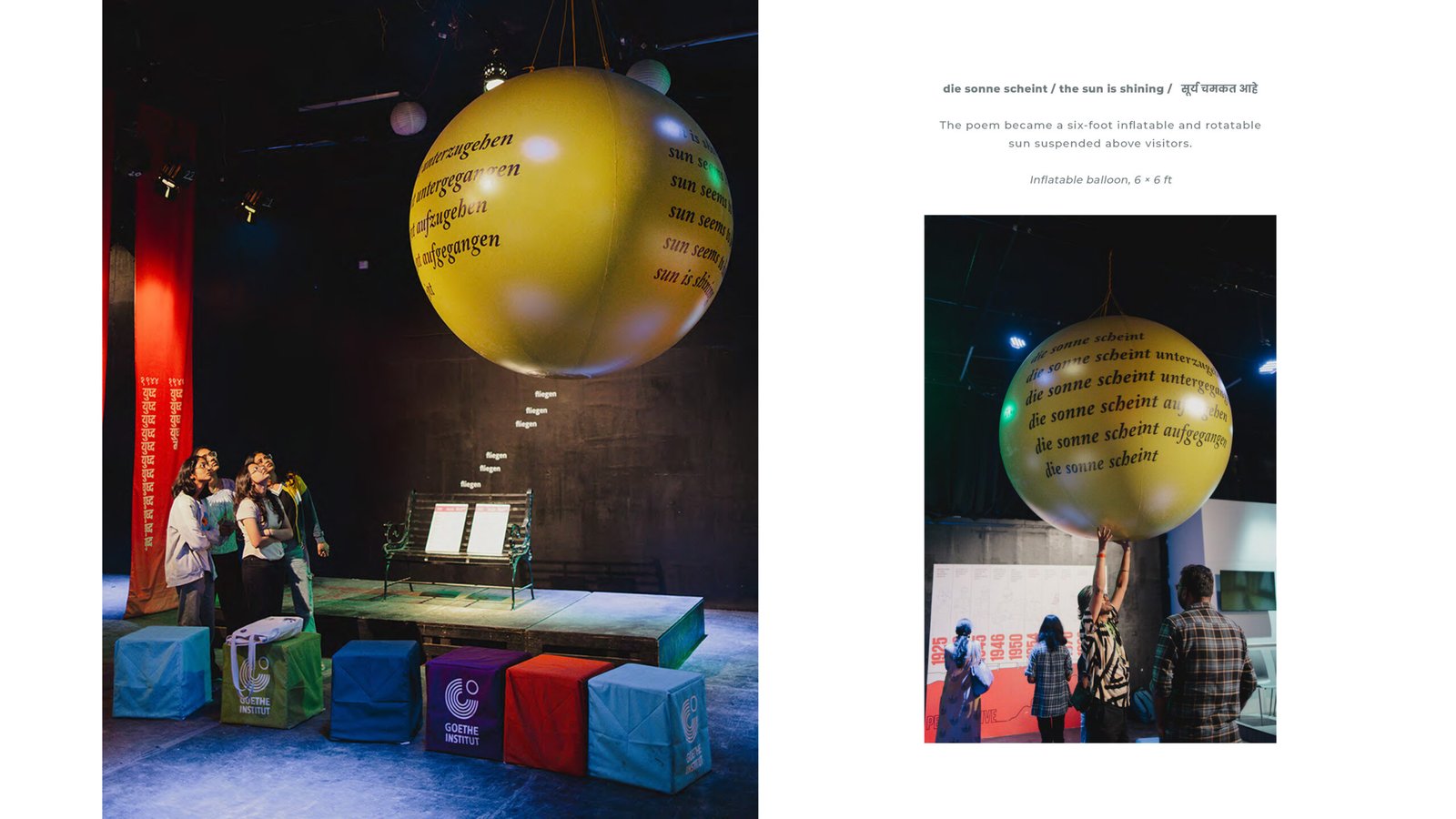
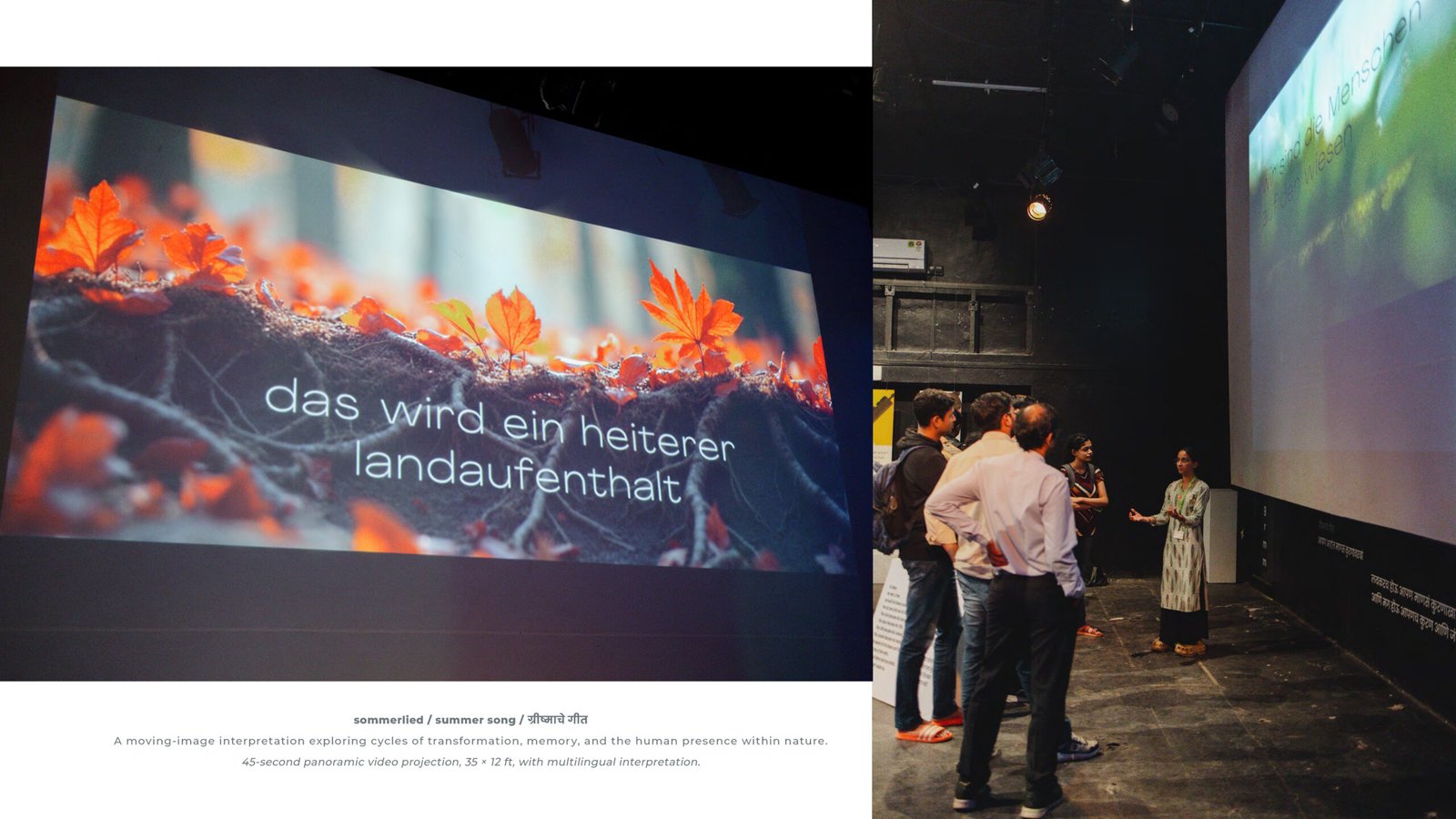
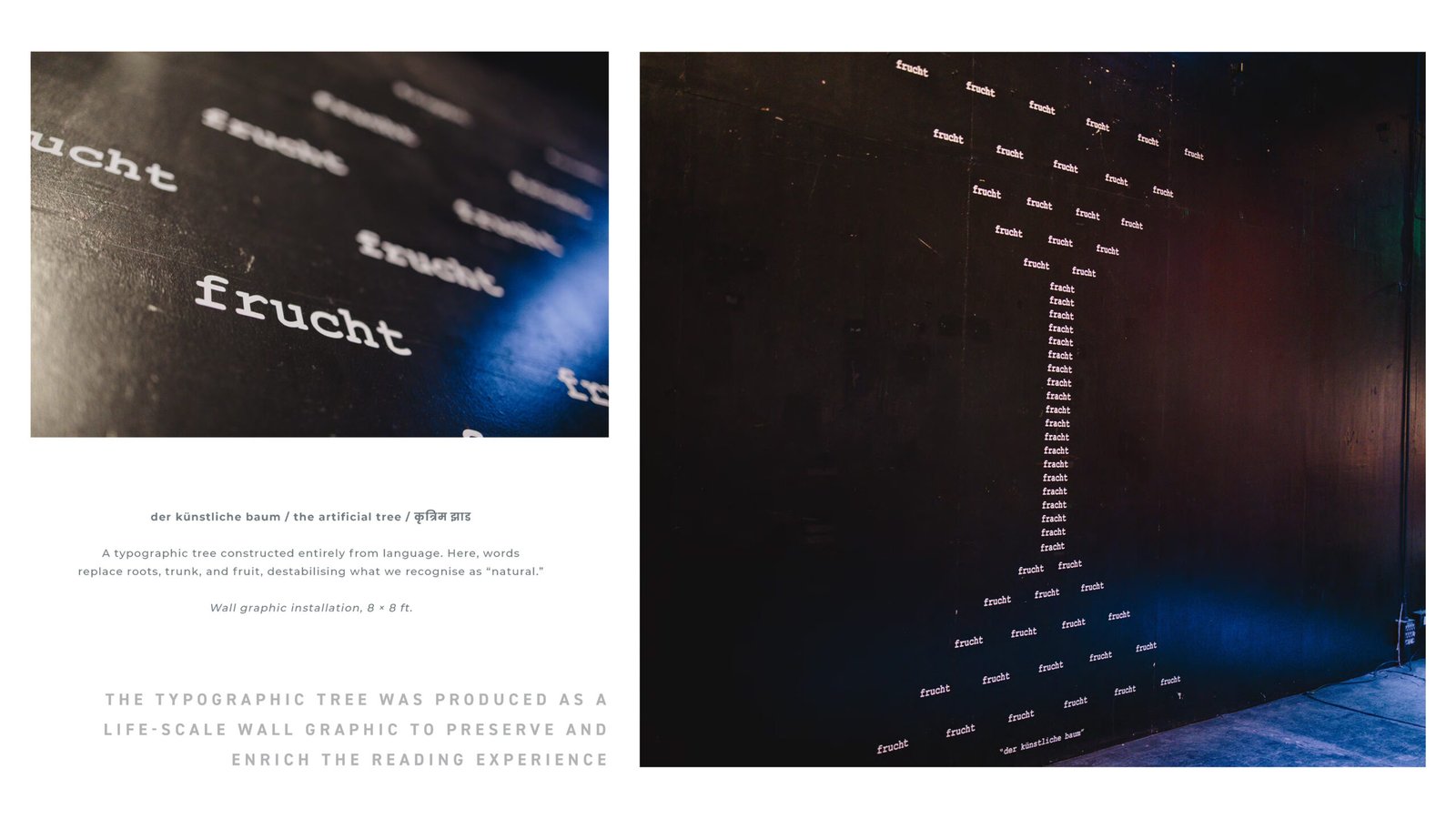
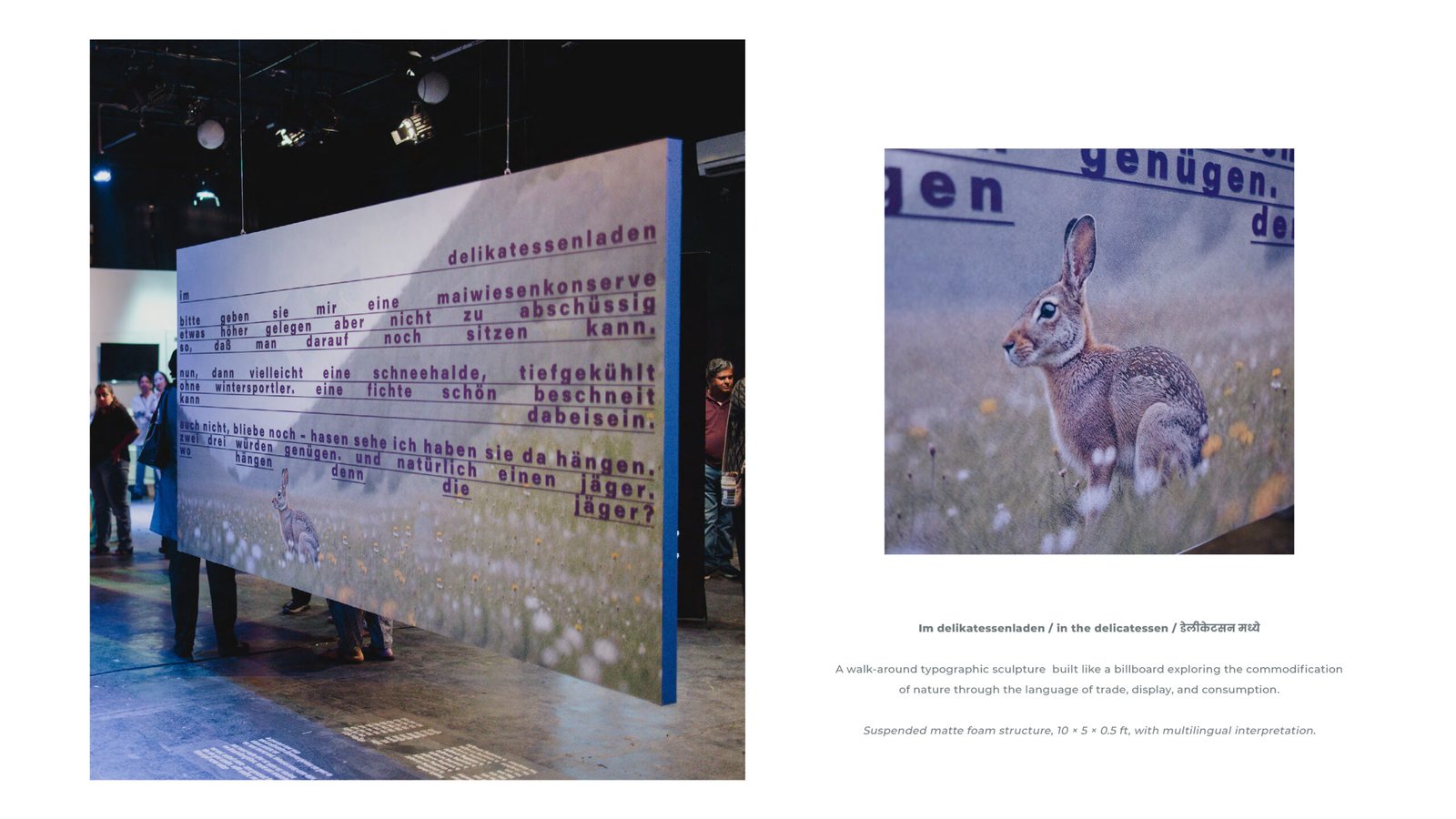
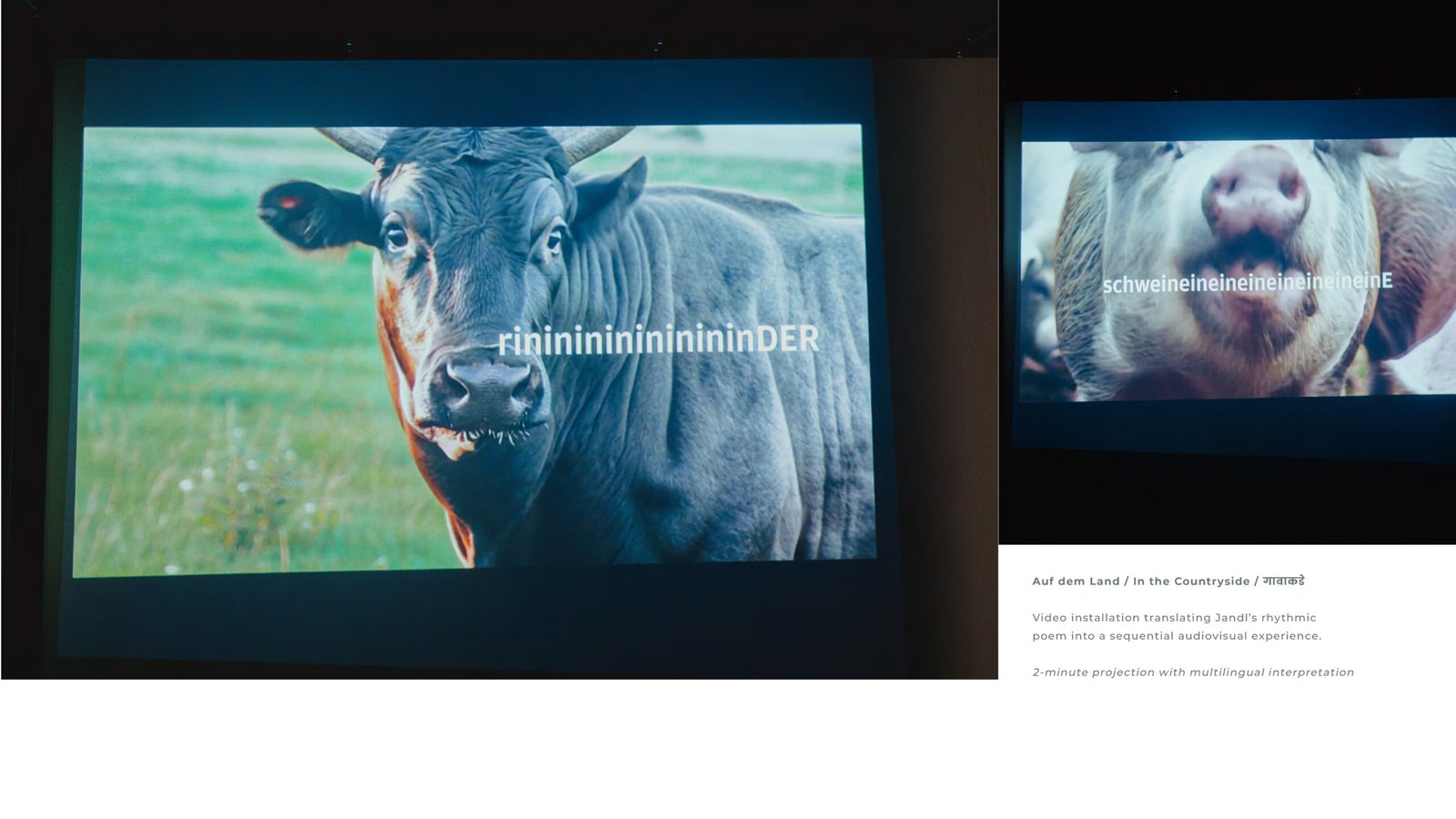
Jandl’s poems such as Die Sonne Scheint, Fliegen, Sommerlied, Der Künstliche Baum, and Im Delikatessenladen were transformed into suspended objects, large-scale wall graphics, moving images, and sculptural text forms. Language was treated as material—capable of becoming a sun, a flock of birds, a tree, or a commodity on display. By shifting poetry from page to space, these installations invited visitors to reflect on humanity’s changing relationship with the natural world and our desire to classify, imitate, possess, domesticate, and reimagine it.

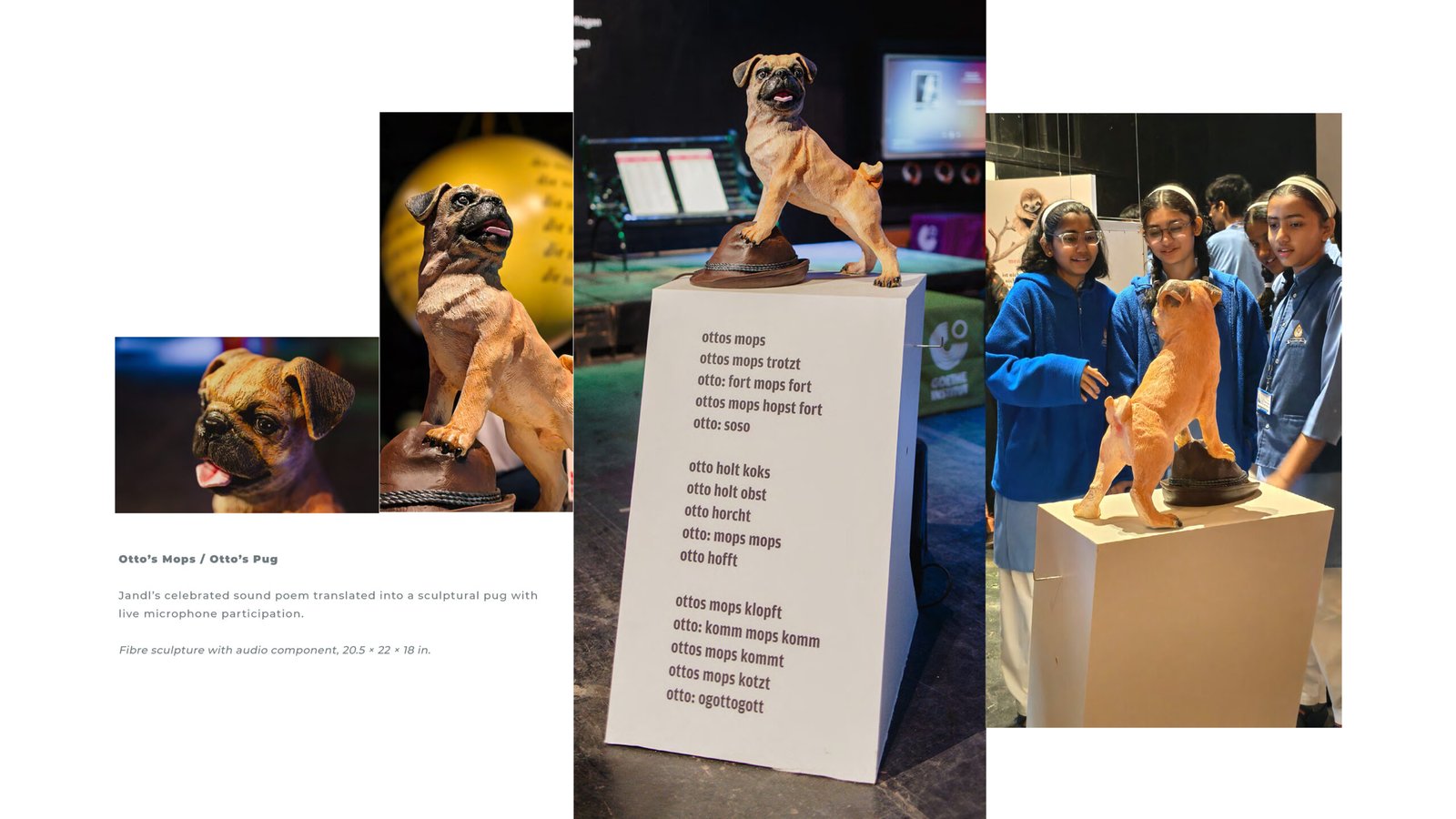
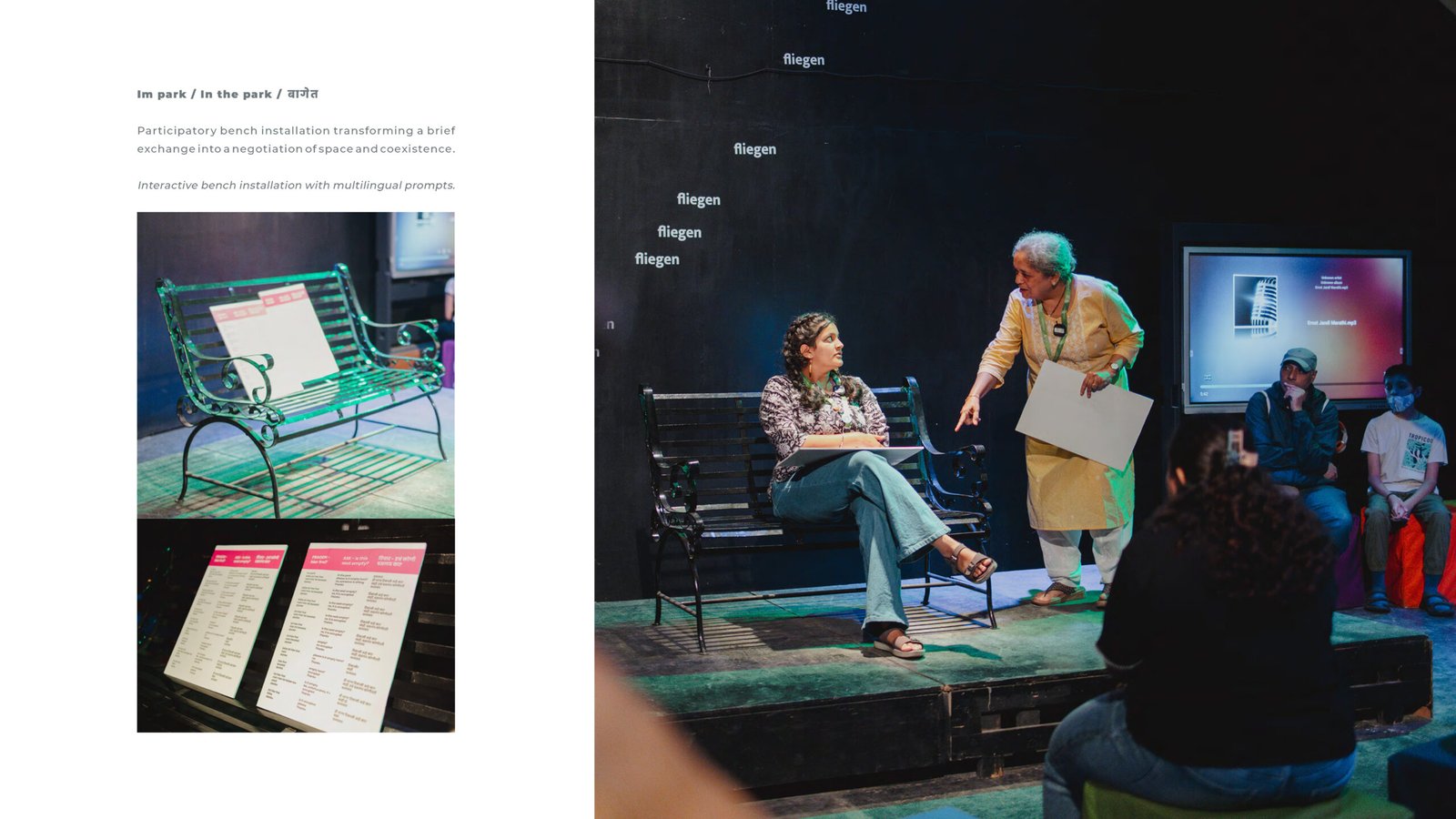
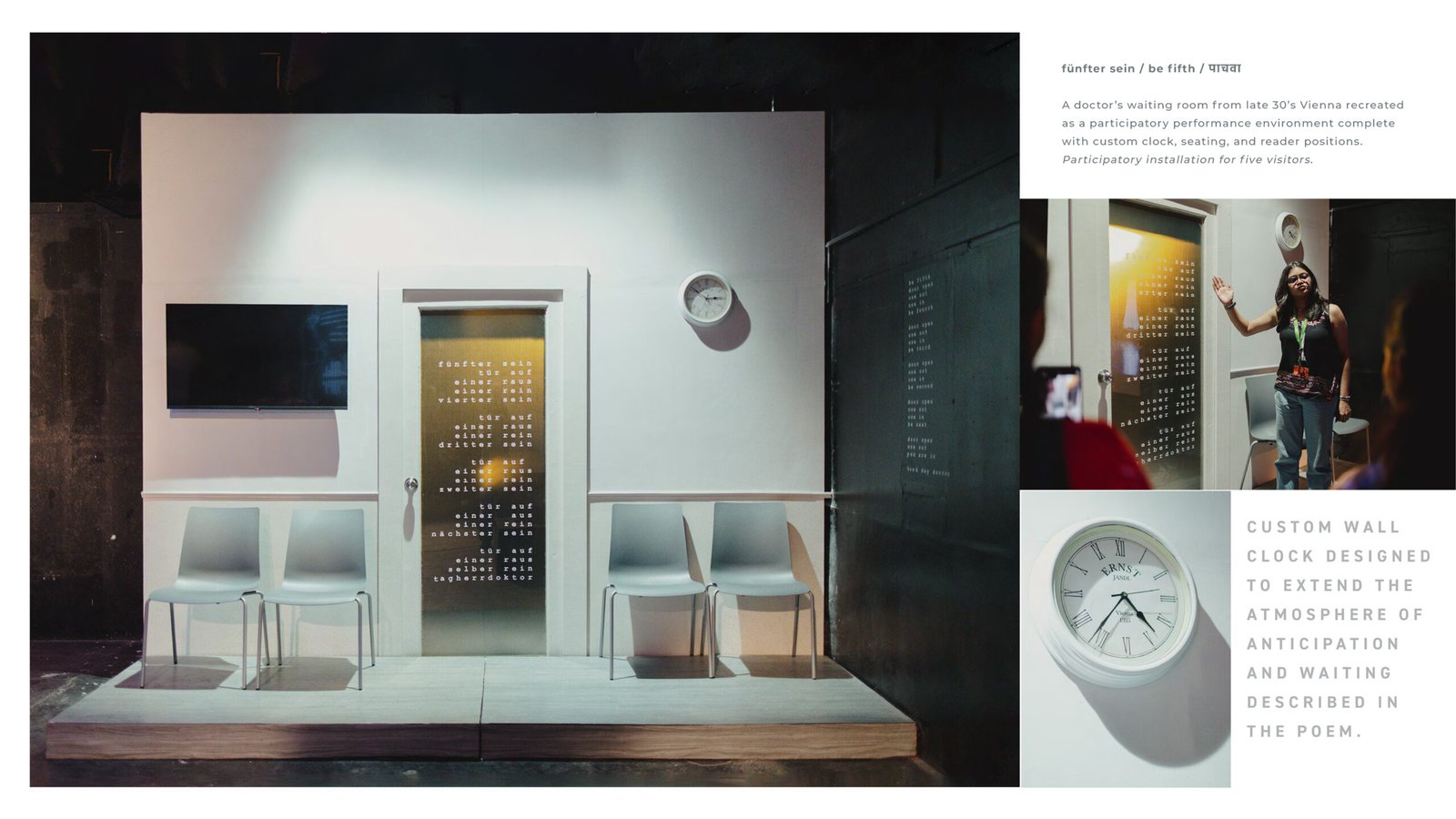
The works in this section were conceived as situations rather than objects. Jandl’s concise, playful texts like Otto’s Mops, Im Park, Stück Für Zwei Hände, and Fünfter Sein were translated into participatory installations, performances, conversations, and encounters. Visitors were invited to wait, listen, speak, negotiate space, and interact with one another.Here, meaning emerged not only from language but from the social rituals through which people connect, misunderstand, cooperate, coexist, and try to be human.


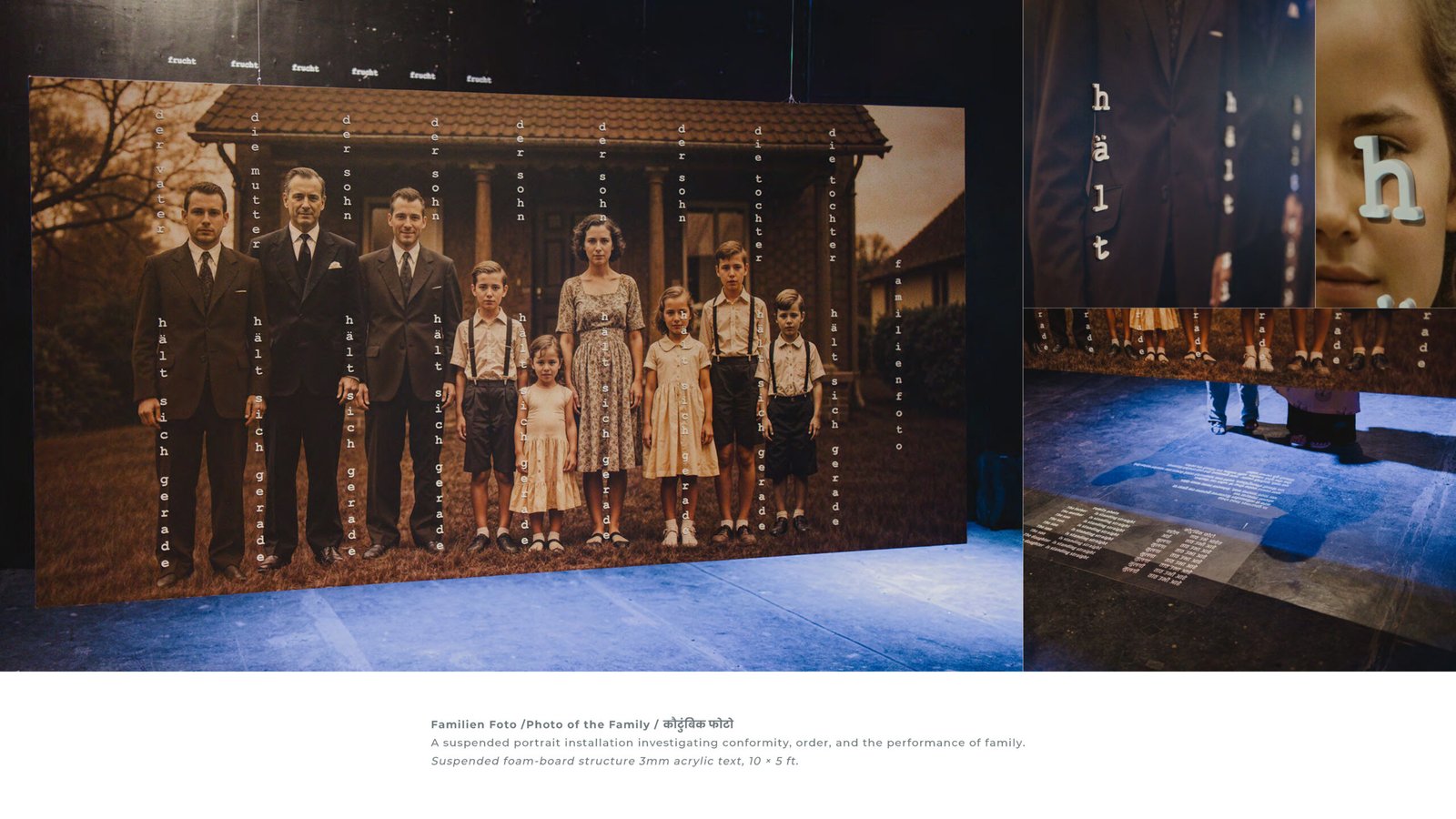
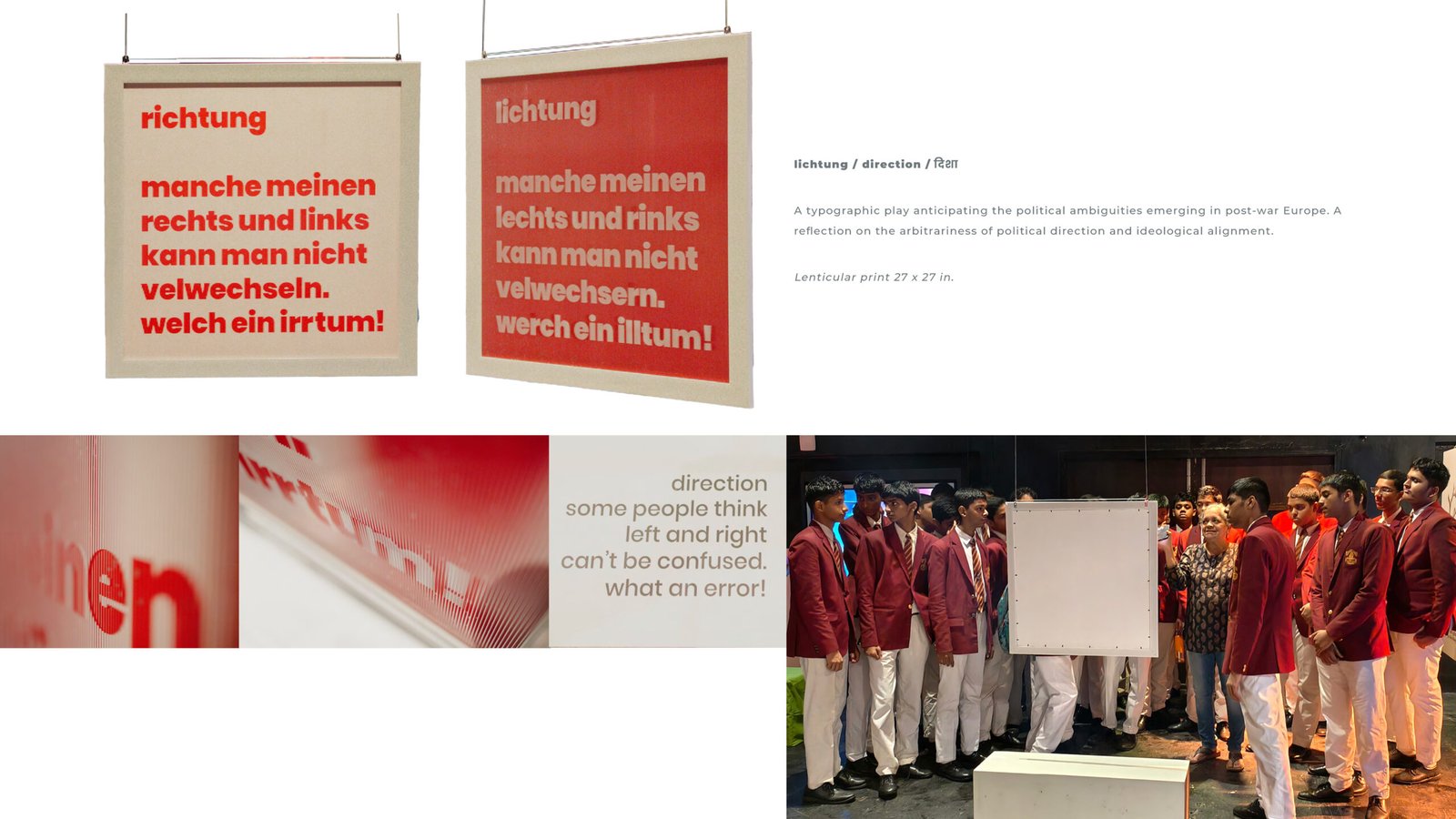
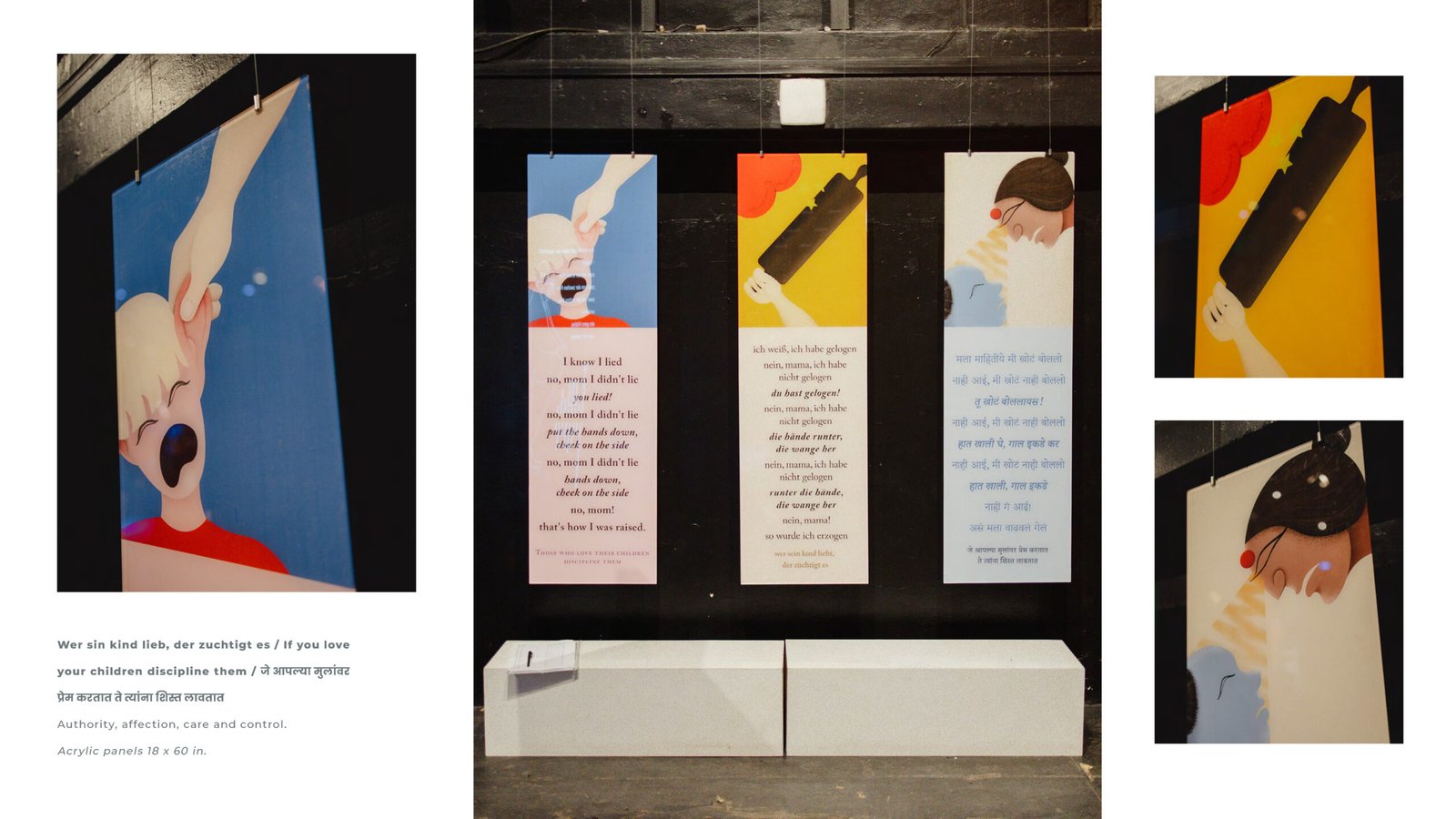
This group of works explores the social contracts through which the human tribe organises itself through language and how language, in turn, becomes an instrument of power. Familienfoto, Wer Sein Kind Lieb, Der Züchtigt Es, Menschenfleiß, Lichtung investigate order, discipline, family and political ideology,Photographs become portraits of conformity. By transforming language into physical structures, the installations examine how systems of order are constructed, maintained, and internalised, revealing the tensions that exist beneath apparently stable social institutions. Language reveals systems of authority. Typographic walls, suspended forms, and lenticular prints view opposites simultaneously. Civilisation appears in Jandl’s poetry as both achievement and constraint.

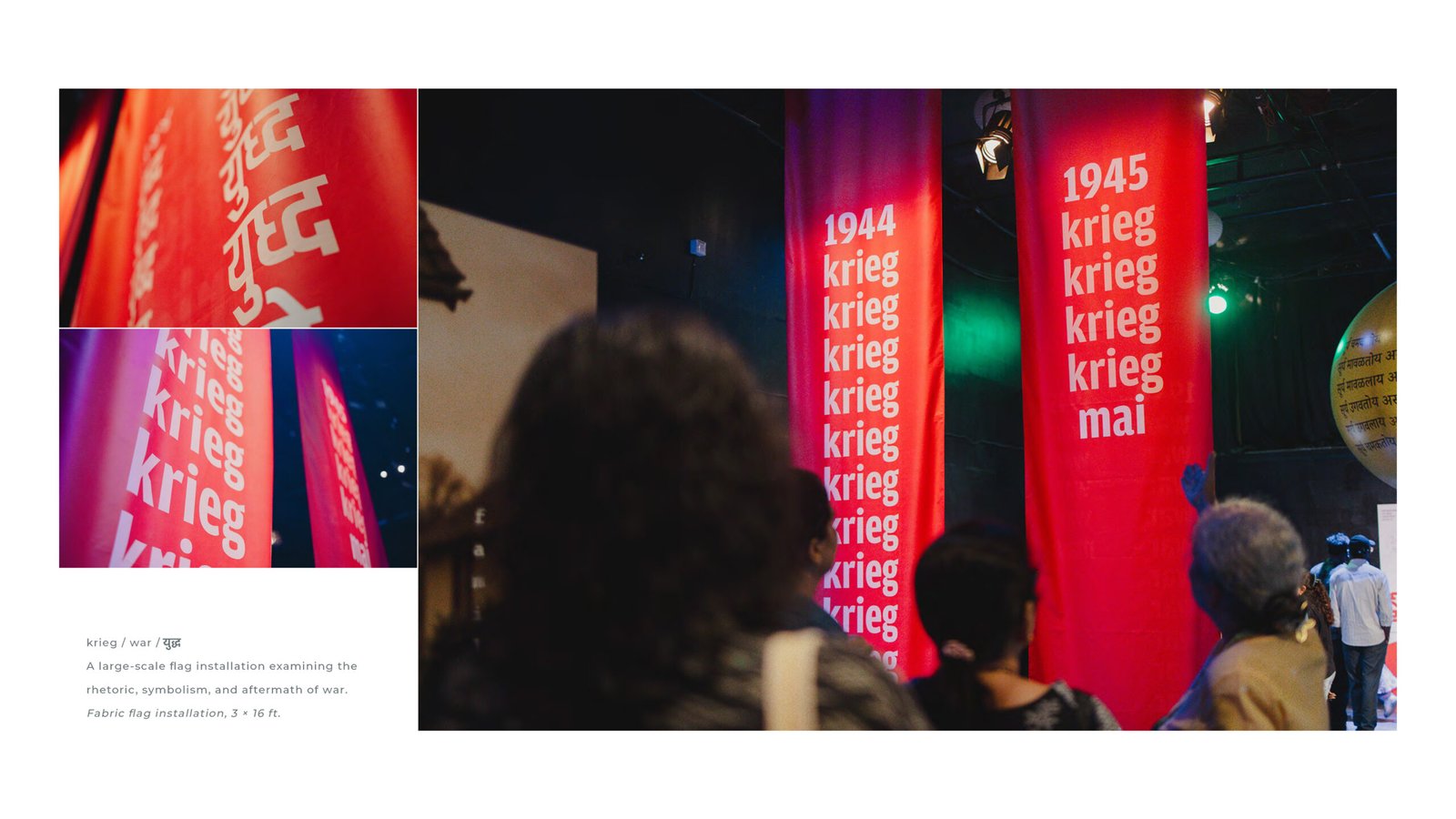
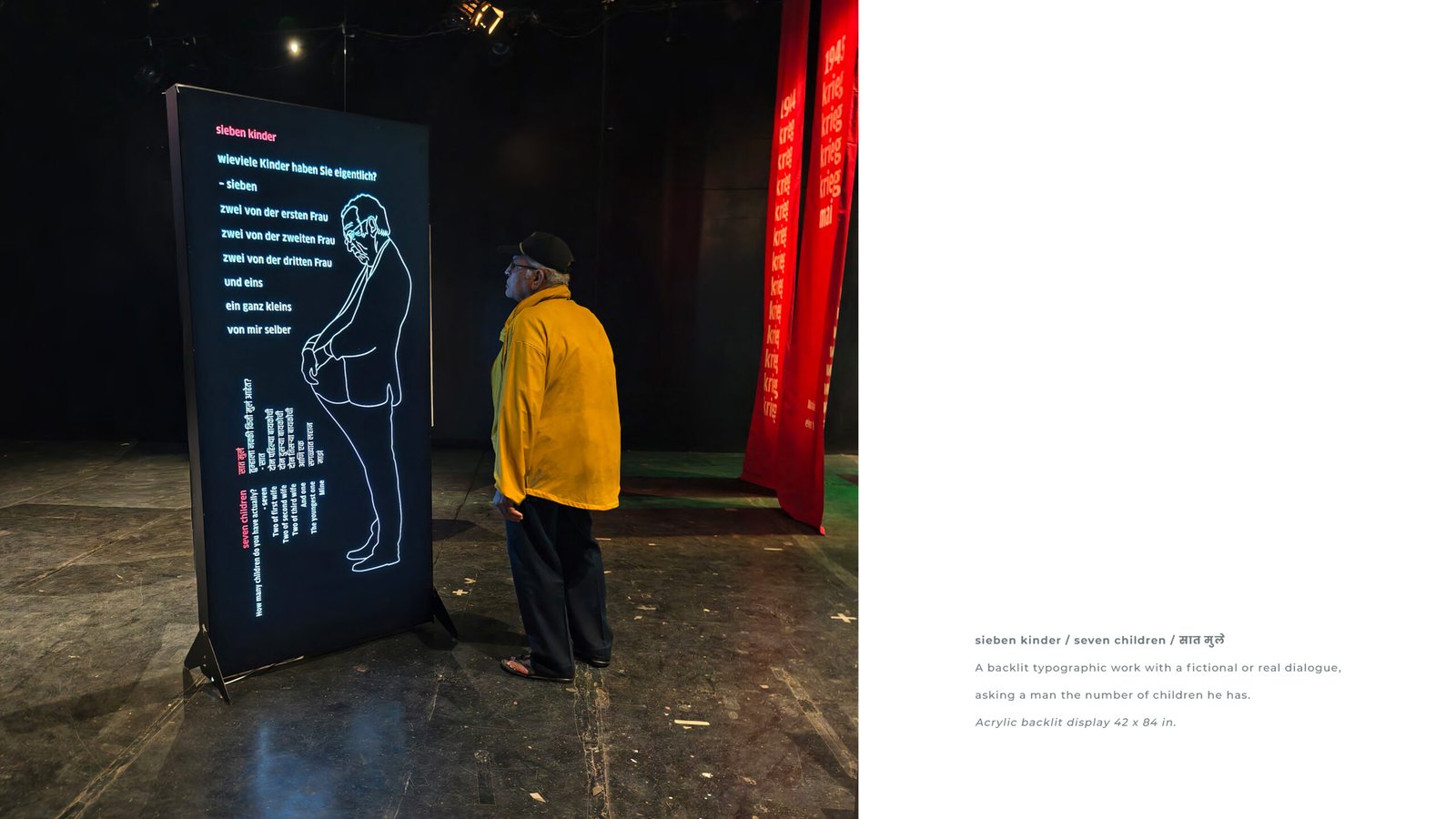
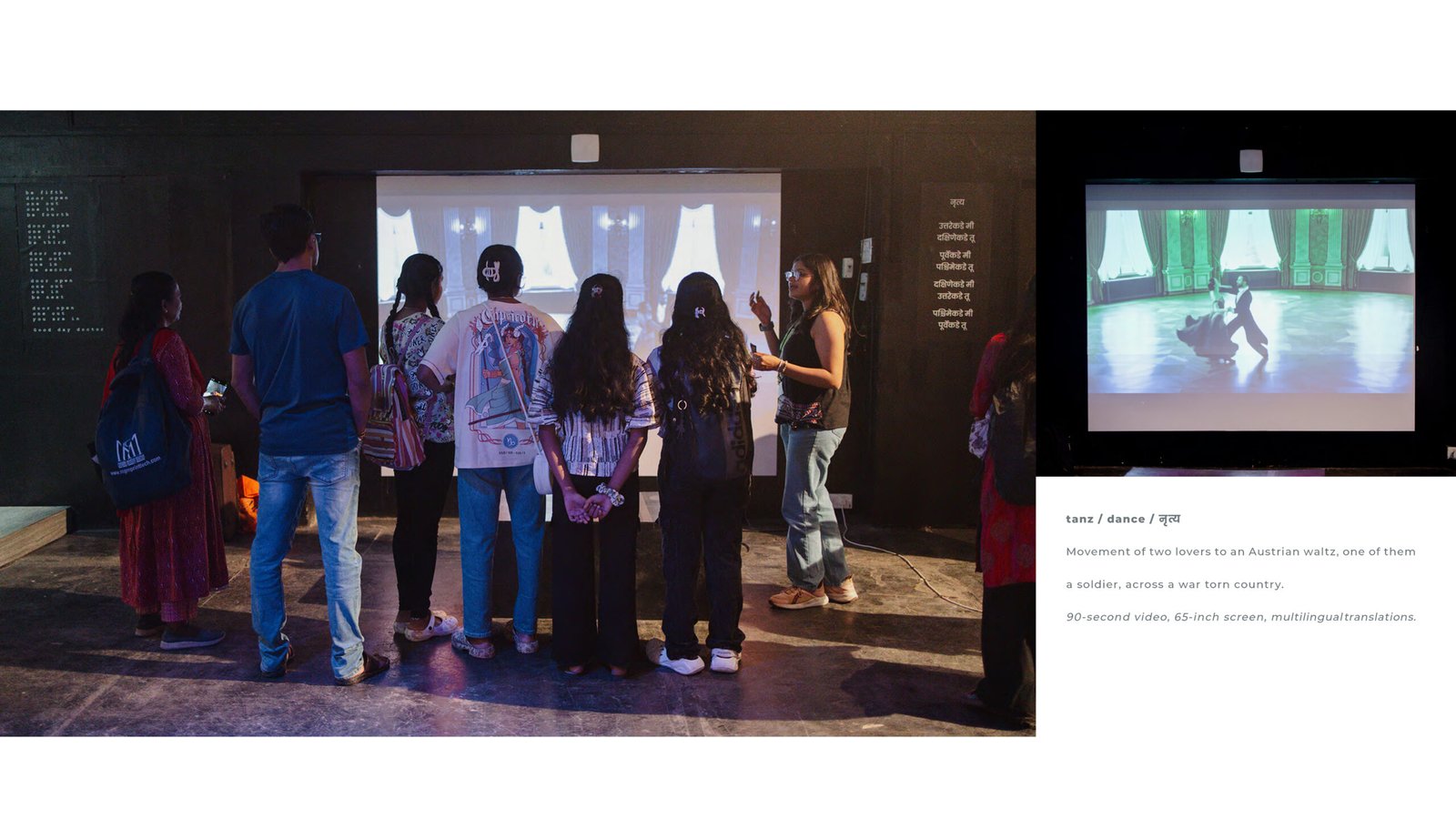
War occupies a central place in Ernst Jandl’s work and biography. Having lived through the Second World War, Jandl repeatedly returned to the ways violence reshapes memory, perception, and language itself.In his poems, war is rarely heroic; it appears instead from multiple perspectives.Krieg evokes the rhetoric, spectacle, and collective fervour through which nations mobilise for war. Haus adopts the aerial gaze of a bomber looking down upon a landscape. Sieben Kinder reflects on the ruptures and reconfigurations of family and belonging in the aftermath of conflict. Tanz follows two lovers moving through a fragile world overshadowed by violence. Rather than illustrating war, these installations explore its lingering psychological and linguistic aftermath.

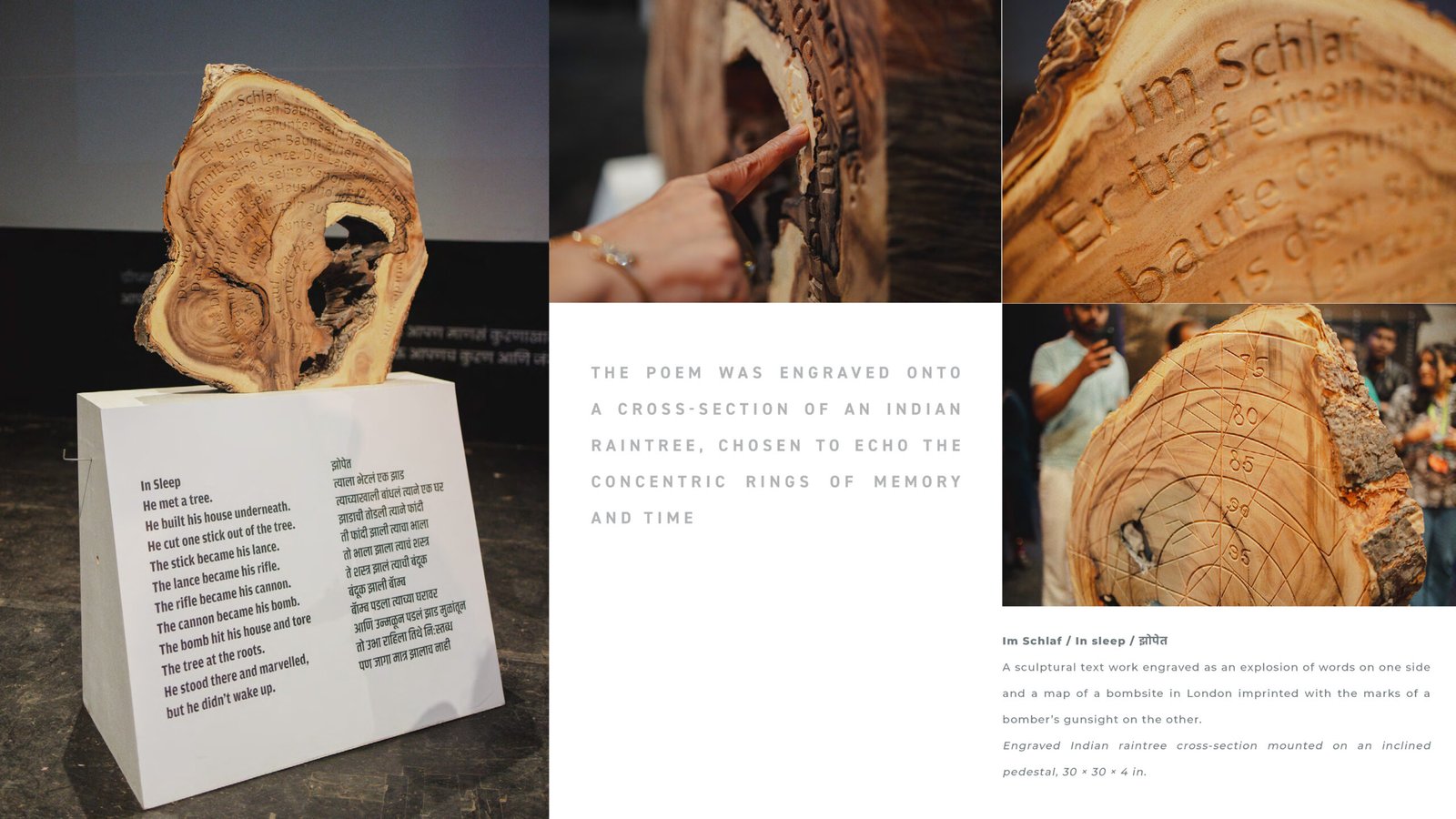
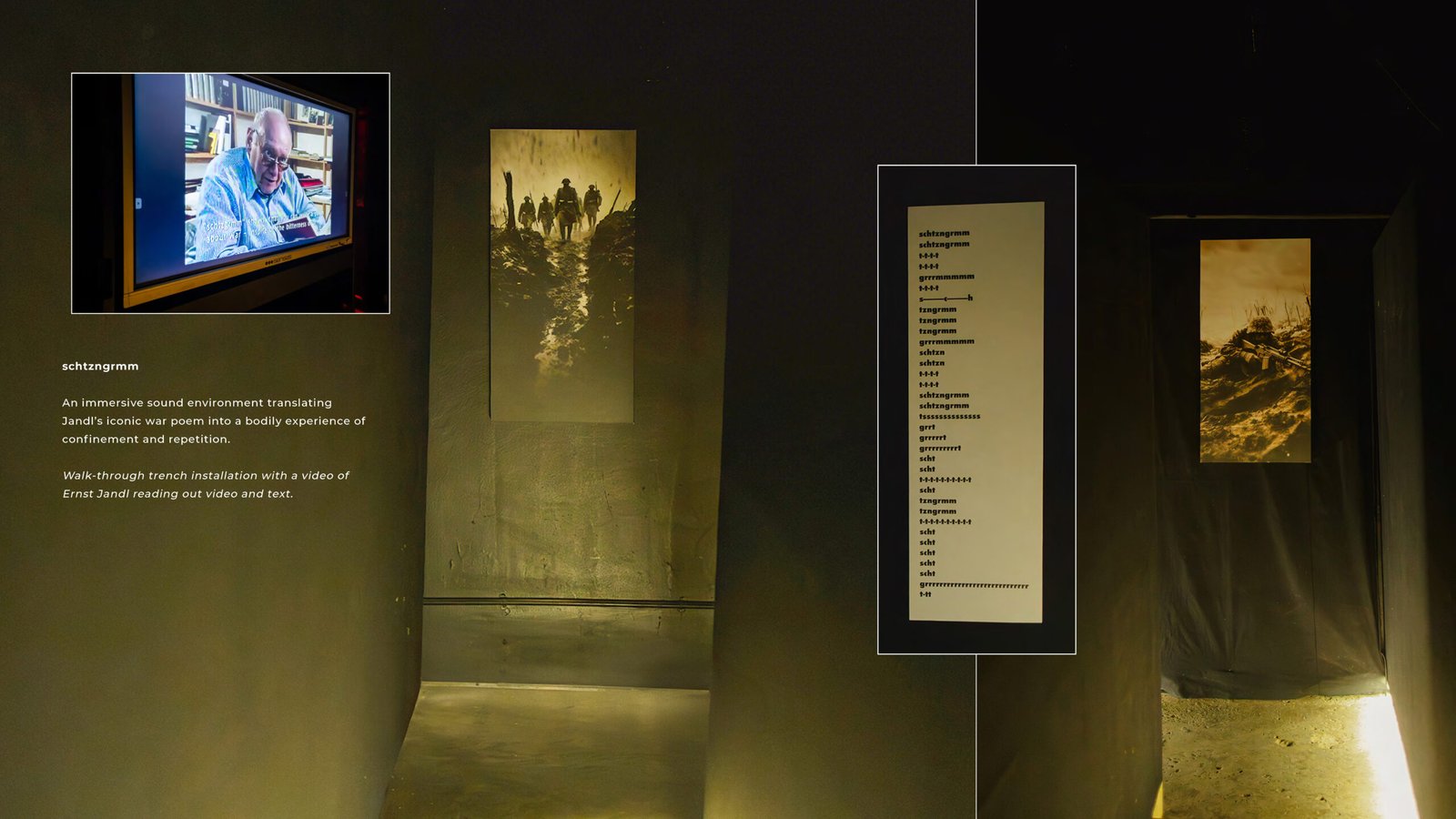
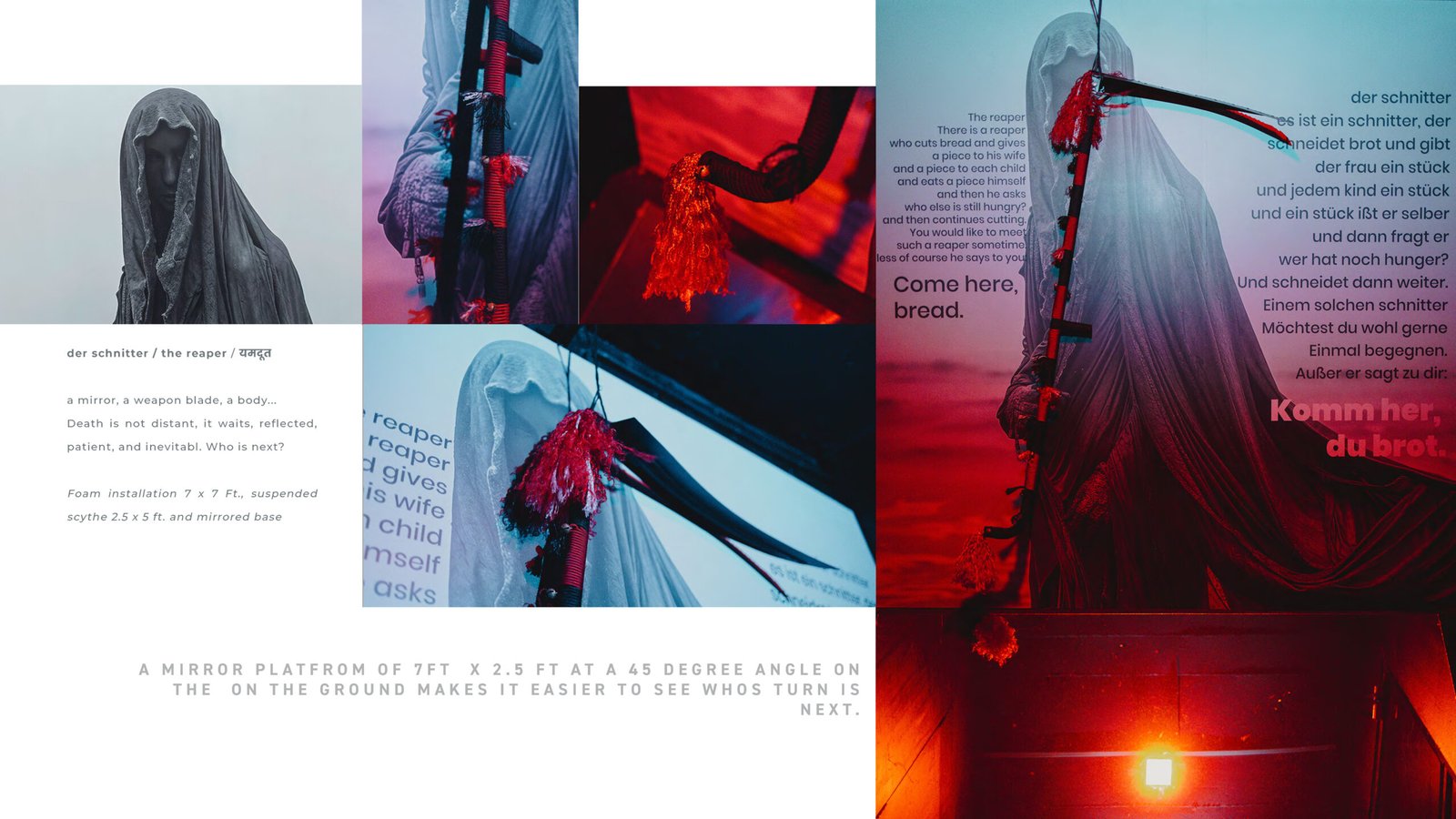
The final group addresses mortality, memory, and the inevitability of death.Schtzngrmm immerses visitors in the physical and psychological confinement of the battlefield. Here, poetry becomes spatial and bodily. Visitors move through restricted environments, encounter fragmented sounds, and experience language stripped of conventional meaning. Sound resembles gunfire. Repetition becomes trauma.Im Schlaf becomes the actual cross section of a tree, Der Schnitter confronts visitors as a mirror where death appears not as spectacle but as a persistent presence inhabiting ordinary life. Placed toward the end of the exhibition journey, these works encourage reflection on the themes encountered throughout the exhibition: nature, humanity, society, and conflict.The exhibition concludes not with resolution but with awareness.
in the Press
Exhibition Themes
I approached Jandl’s works as landscapes of perception, transformation, and contradiction. Poems such as Die Sonne Scheint, Fliegen, Sommerlied, Der Künstliche Baum, and Im Delikatessenladen were transformed into suspended objects, large-scale wall graphics, moving images, and sculptural text forms. Language was treated as material—capable of becoming a sun, a flock of birds, a tree, or a commodity on display. By shifting poetry from page to space, these installations invited visitors to reflect on humanity’s changing relationship with the natural world and our desire to classify, imitate, possess, domesticate and reimagine it.
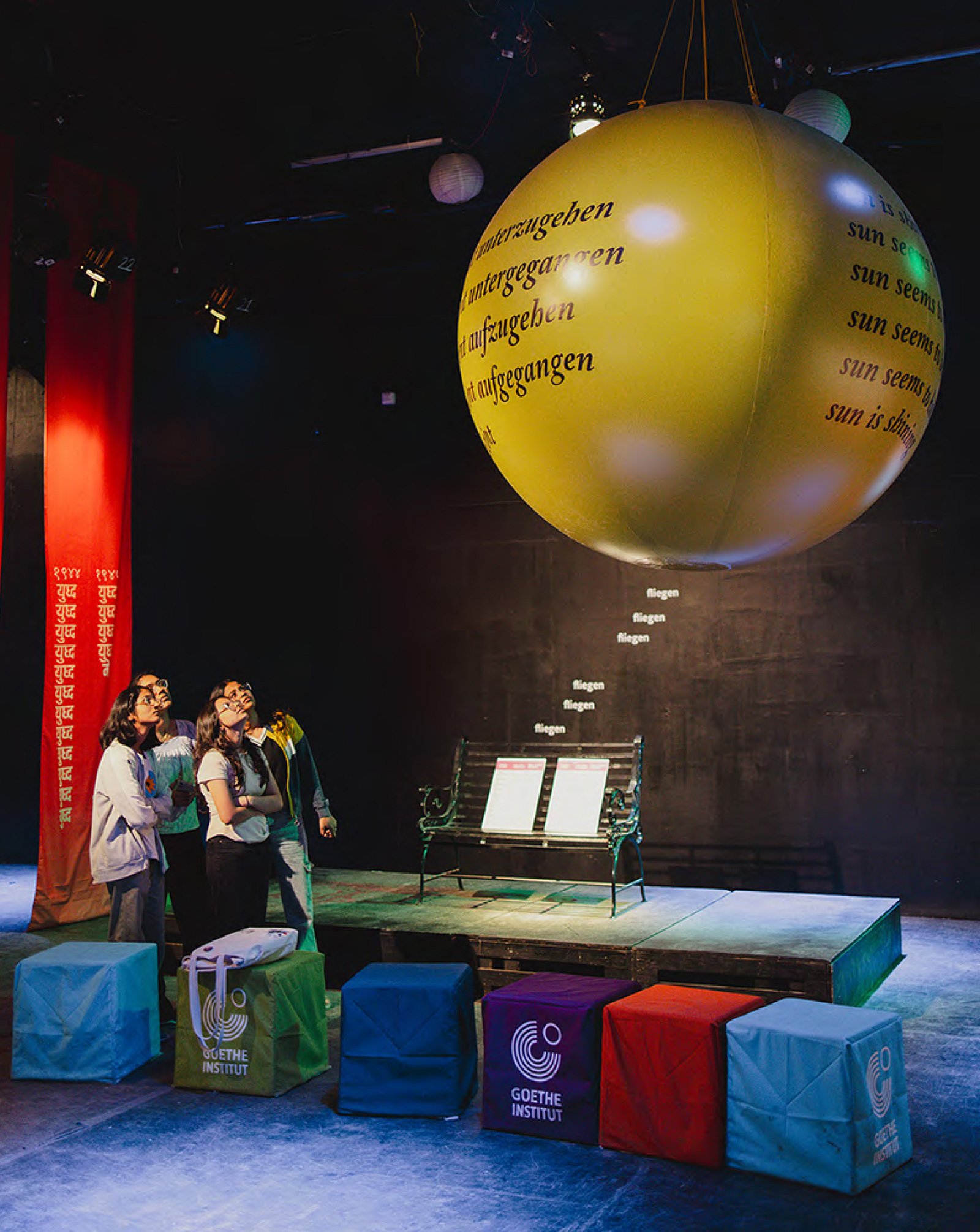
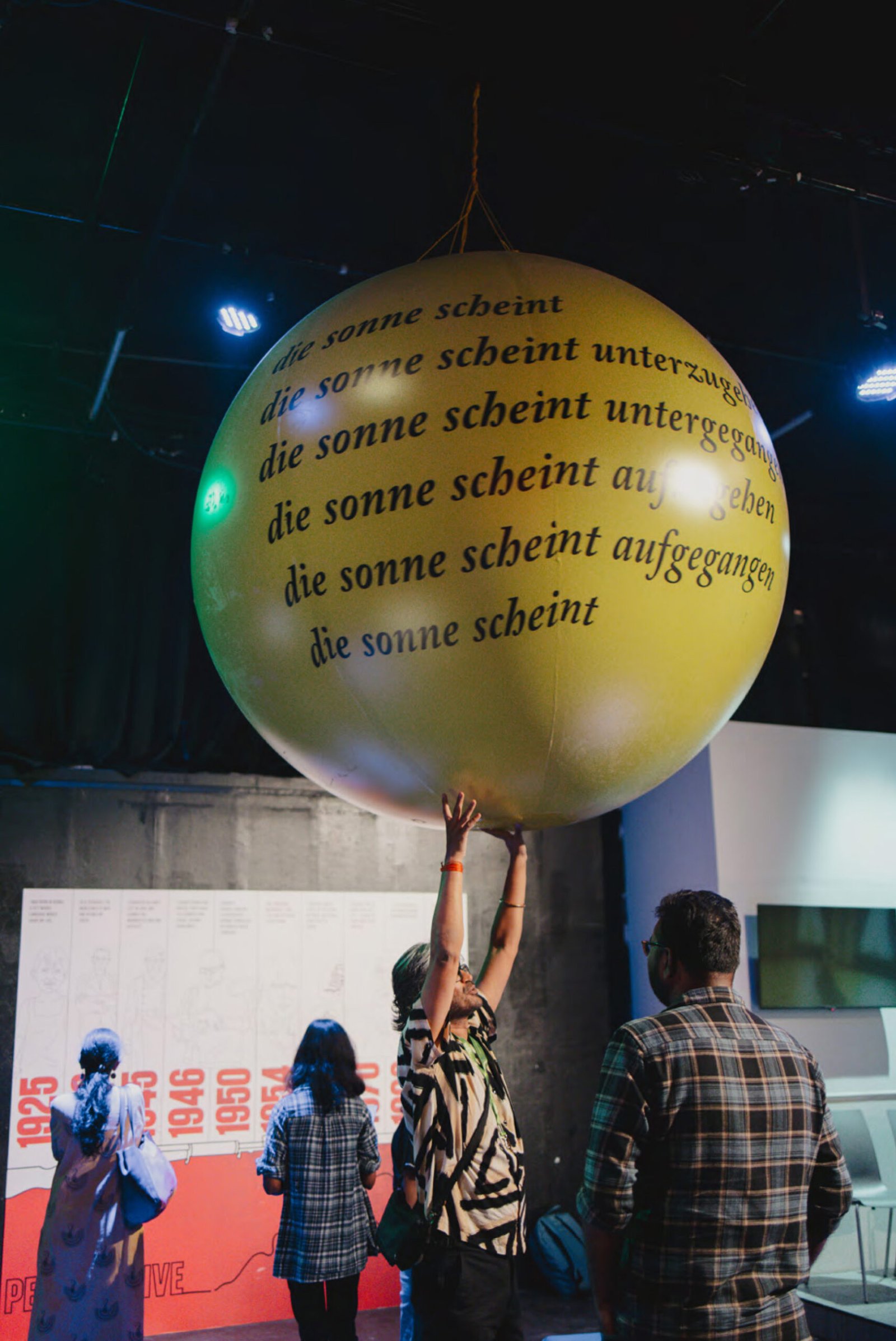
die sonne scheint / the sun is shining / सूर्य चमकत आहे The poem became a six-foot inflatable and rotatable sun suspended above visitors. Inflatable balloon, 6 × 6 ft
Theme 2
I approached Jandl’s works as landscapes of perception, transformation, and contradiction. Poems such as Die Sonne Scheint, Fliegen, Sommerlied, Der Künstliche Baum, and Im Delikatessenladen were transformed into suspended objects, large-scale wall graphics, moving images, and sculptural text forms. Language was treated as material—capable of becoming a sun, a flock of birds, a tree, or a commodity on display. By shifting poetry from page to space, these installations invited visitors to reflect on humanity’s changing relationship with the natural world and our desire to classify, imitate, possess, domesticate and reimagine it.
die sonne scheint / the sun is shining / सूर्य चमकत आहे The poem became a six-foot inflatable and rotatable sun suspended above visitors. Inflatable balloon, 6 × 6 ft
Empty section. Edit page to add content here.
I approached Jandl’s works as landscapes of perception, transformation, and contradiction. Poems such as Die Sonne Scheint, Fliegen, Sommerlied, Der Künstliche Baum, and Im Delikatessenladen were transformed into suspended objects, large-scale wall graphics, moving images, and sculptural text forms. Language was treated as material—capable of becoming a sun, a flock of birds, a tree, or a commodity on display. By shifting poetry from page to space, these installations invited visitors to reflect on humanity’s changing relationship with the natural world and our desire to classify, imitate, possess, domesticate and reimagine it.